
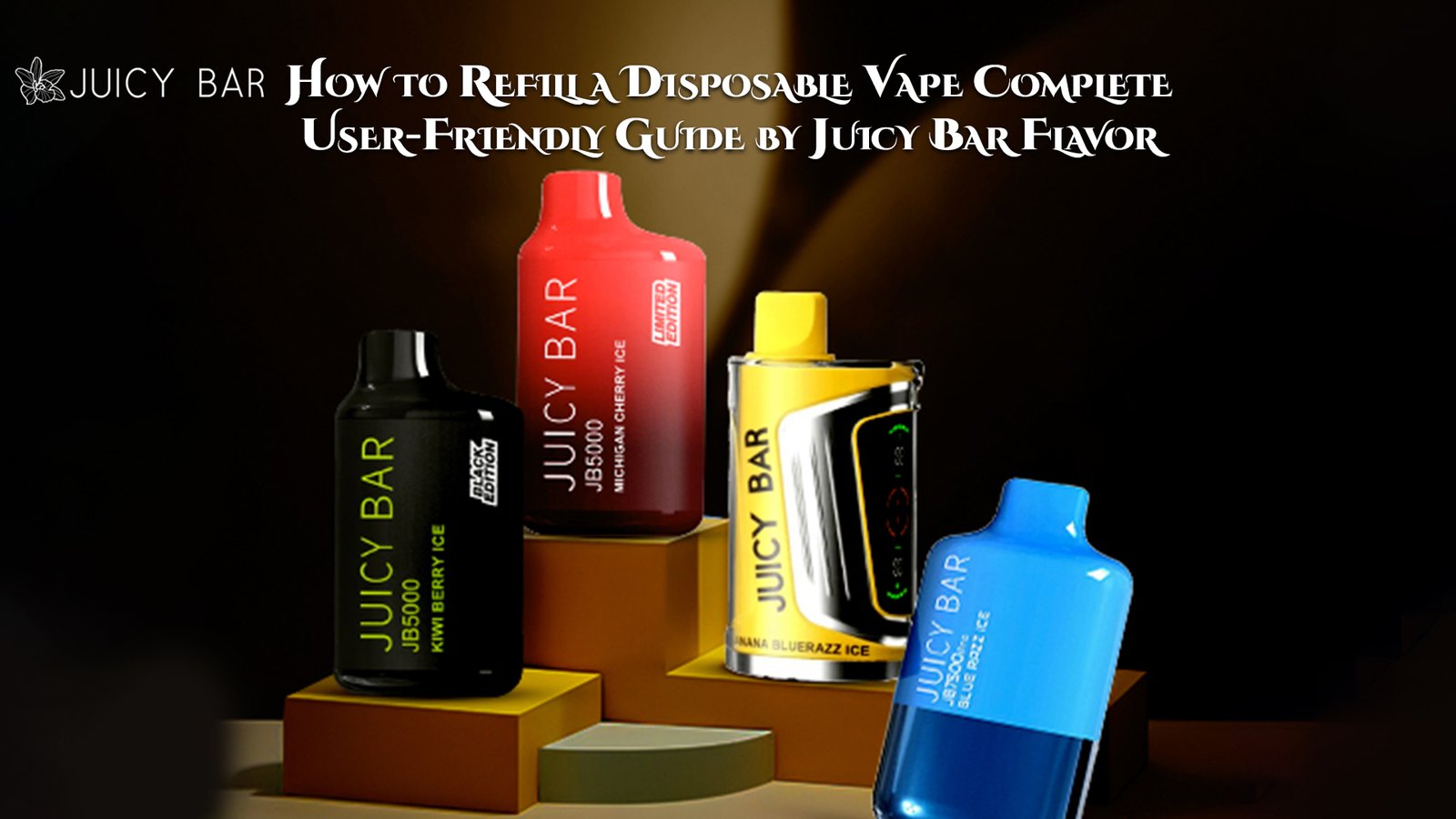
“How to refill a disposable vape” is often the moment when a user wonders if they’re wasting something useful. Disposable vapes are built for ease, but many devices still have a battery, still have parts in good condition—so refilling can be tempting. This guide from Juicy Bar Flavor will help you decide whether refilling is possible for your device, how to do it safely, and what to expect. We’ll also cover mistakes to avoid, realistic limits, and hands‑on advice so you can try confidently.
Deep Dive Into Disposable Vape Construction & Refill Feasibility
What’s Inside a Disposable Vape
To understand whether refilling is possible, you need to know what’s inside:
- Battery: Usually a built‑in lithium-ion or lithium-polymer cell. It powers the coil and electronics.
- Coil/Heating Element: A metal wire or mesh that heats up to vaporize the e-liquid; usually wrapped in cotton or similar wicking material.
- Wick (Cotton, Ceramic, or other absorbent material): Carries e-liquid from tank to coil. Its quality influences flavor, performance, and how well it handles refilling.
- Tank / E-liquid Chamber / Sponge: Holds the e-liquid. Some devices use small sponge or cotton cores, others have sealed plastic chambers.
- Seals, Plugs, Mouthpiece, Airflow Channels: Parts that prevent leaks, control airflow, and allow inhalation.
Design Features That Enable Refill
Certain features make a disposable vape more likely to be refillable:
- Removable mouthpiece or cap
- A rubber or silicone plug or stopper covering a refill port
- Visible seams or detachable sections
- Sponge or cotton accessible under the plug or the mouthpiece
If your device lacks access, forcing it open risks damage.
Materials Quality & its Impact
- Coil wire type (e.g. Kanthal, stainless steel, etc.) affects heating stability and how harsh burnt hits will be.
- Wick material: Pure cotton wicks absorb better, ceramic wicks resist overheating but may be slower to wick. Lower-quality cotton or synthetic wicks degrade faster.
- Seals and plugs: If made cheaply, they break or loosen after one refill.
Battery, Electronics & Why They Matter
- Battery capacity and discharge ability limit how long the device will last—even if you refill liquid.
- Internal wiring may be fragile; disassembly risks damaging it.
- Airflow channels must remain clear; leaking liquid into airflow or battery area may short out internal components.
All these give a sense of what “can be refilled” really means—it depends on good design, durable parts, and careful handling.
Tools, Liquid Compatibility & Setup Revisited

Expanded Tools & Accessories
- Precision Dropper / Syringe with fine tip: some devices have very small chambers; a regular dropper may flood or spill.
- Small flat screwdrivers or plastic pry tools: for lifting sealed caps or plugs without breaking plastic.
- Magnifying glass or flashlight: helps to see small components, check seals, inspect wick/coil condition.
- Spare gaskets/plugs: wear and tear from repeated opening will degrade seal tightness.
Detailed Liquid Matching
Liquid matters:
- PG/VG Ratio: Higher VG gives more vapor, but thick liquids may be harder to wick in tight devices. Higher PG is thinner, better wicking but less vapor.
- Flavor strength & sweetness: Sweet or very flavored liquids tend to cause faster buildup on the coil and wick—leading to faster degradation.
- Nicotine type (salt‑nicotine vs freebase): Salt nic can feel smoother at higher strengths; freebase can be harsher. Both types influence how the hit feels and how often you may refill or need to replace.
Workspace & Safety Setup
- Work over a lined tray or wipeable surface to catch spills.
- Keep a clean cloth and some alcohol wipes to clean parts after opening.
- Use proper lighting; avoid small parts being lost.
- Keep devices and liquids away from children or pets.
- Have gloves and eye protection, especially if cutting or prying is needed.
Step‑By‑Step Refill Guide (In‑Depth)
Below is a more thorough walkthrough, including sub‑steps and checking points.
Step 1: Inspect and Plan
- Identify the brand, model. See if user manual or markings mention refill or “not for refilling”.
- Examine joints, mouthpiece, base, sides for plugs/caps.
- Check condition of battery — no bulging, no corrosion.
Step 2: Open with Care
- Use tools gently. Pry under edges of the plug or mouthpiece just enough to lift; avoid bending plastic or pressing on battery.
- Keep track of removed parts (plugs, caps, gaskets) so re‑assembly is correct.
Step 3: Remove Old Liquid and Clean
- Use a syringe to draw out any remaining liquid. Wipe tank with a wipe or paper towel.
- Inspect wick: if parts are blackened, brittle, or hardened, consider replacing wick or understand flavor will be compromised.
Step 4: Check the Coil & Wick
- If wick looks gummed up, try a light rinse (if safe) or gently dry to restore some absorption.
- Check that coil is not obviously broken or rusted. If so, expect performance will be less.
Step 5: Fill with New Liquid
- Use small doses. Fill little by little.
- Leave a small air gap at top of chamber. Too full causes flooding; too little causes dry hits.
Step 6: Seal Everything Right
- Replace plugs, gaskets, caps carefully; ensure alignment.
- Ensure no part is forced or under tension.
Step 7: Prime the Valve / Wick & Rest
- Let device sit 5‑10 minutes so wick absorbs liquid.
- If possible, draw without powering or firing (just inhale) to draw liquid into wick.
Step 8: Test Gently
- Take 1‑2 small puffs. Check taste. If harsh or burnt, stop.
- Check for leaks. If leakage, reopen, reseal.
Step 9: First Sessions Post‑Refill
- Begin with lighter draws / less frequent usage to allow parts to settle.
- Monitor vapor production, flavor over first few sessions.
Realistic Lifespan & Practical Expectations
How Many Refills Are Reasonable
- Usually 1 to 2 refills before major decline in flavor, vapor, or increased leakage.
- Attempting more may risk damage becoming unsafe or unpleasant.
Signs of Decline
- Flavor loss: after first few uses, taste weak or stale.
- Dry hits / burnt hit: even after priming.
- Leaks from mouthpiece or base.
- Battery life reducing or heating irregularly.
When to Give Up
- When flavor stays bad even after multiple cleanings.
- When seals no longer hold.
- When battery shows swelling or overheating.
Model Examples & User Stories
Here are hypotheticals or anonymized user stories to illustrate what real users report.
Case Study 1: The “SlimRefill” Device
A user had one of the slimmer disposables with a clear plastic top and a small rubber plug under the mouthpiece. After 3 months, the plug was still tight. They refilled twice with moderate VG/PG ratio. First refill added about 90% of original performance; second refill dropped flavor by ~30%. After that, wick fiber started to char.
Case Study 2: The “Fast‑Hit” Bar
Another user had a high‑draw disposable. Battery lasted a bit longer, but the coil got hot quickly post‑refill. They reported mild burnt taste after first refill, and after second, the battery felt hotter.
These concrete examples show you get some extension, but not indefinite reuse.
Battery & Material Safety — Very Detailed
Because a lot of risks in refilling disposables come from battery and material issues, this section is expanded.
Lithium Battery Risks
- Exposure to damage or moisture can cause internal short circuits.
- Lithium‑ion or lithium polymer cells in disposables are not always built for repeated open/close cycles or heavy stress.
Safe Charging / Usage
- If device is rechargeable, use the charger supplied or approved.
- Do not charge overnight or leave device charging unattended.
- Store device in moderate temperature—not in direct sun, cars in hot weather, or very cold spots.
Material Safety (Wicks, Coils, Seals)
- Low‑quality wick materials burn faster.
- Coil metals need to handle heat: stainless steel tolerates heat better than some cheaper alloys.
- Seals must remain intact; damaged plugs leak liquid into places that should stay dry.
FAQs About How to Refill a Disposable Vape
Can I always expect the same flavor after refilling?
Not always. Flavor tends to reduce with each refill due to wick/coils aging.
Does refilling make vaping cheaper?
Sometimes—but with risks and effort. The cost of refilling plus parts (plugs, cleaning) may approach cost of a new device in some cases.
Will my disposable vape still feel smooth after refill?
If liquid is compatible and wick is good, yes initially. But it may degrade after a refill or two.
What should I check before buying a disposable vape if I plan to refill?
Look for access parts (plug, removable mouthpiece), quality build (tight seals), battery strength, clear material around tank to monitor liquid level.
Is it safer to just buy a refillable vape instead?
For many users who plan refills, yes. Refillable or pod‑based systems are designed for repeated use and often offer better safety, performance, and control.
Helpful Resources from Juicy Bar Flavor
Explore Disposable Vapes with Long Battery Life
Browse Juicy Bar Flavor Disposable Vapes
If you’re considering refilling a disposable vape, it’s best to start with a reliable model. Our curated collection features top-performing disposable vapes designed for flavor, battery life, and overall durability. These devices are perfect for users who may want to get the most from their vape—whether you’re using it once or exploring careful refill attempts.
Trusted External References for Vaping Safety & Awareness
Learn About Vaping Regulations in Your Area
FDA: Vaping Products & Guidelines
If you’re unsure about the safety, legal, or regulatory side of modifying or refilling disposable vapes, the FDA provides up-to-date guidance. Learn how devices are classified and what’s allowed under federal regulations.
Understand the Health Aspects of Refilled Vapes
CDC: E-Cigarette Use & Health Risks
Before attempting to refill any disposable vape, it’s important to understand the potential health effects. The CDC offers easy-to-read, science-backed content on vaping safety, especially regarding reused coils and worn-out components.
Final Thoughts: How to Refill a Disposable Vape
Refilling a disposable vape can stretch the life of your device—but only in certain cases. Devices with access ports, good wick and coil condition, high‑quality seals, and moderate usage are most likely to succeed. But limits exist: flavor, battery, and leakage will eventually degrade with repeated refills.
At Juicy Bar Flavor, we want you to vape smart. Choose devices with better build quality, inspect parts carefully, use compatible liquids, work with planned care, and know when a disposable is better left not refilled or replaced. If you want improved reuse, explore our selection of vape devices and find ones built closer to refill feasibility.